
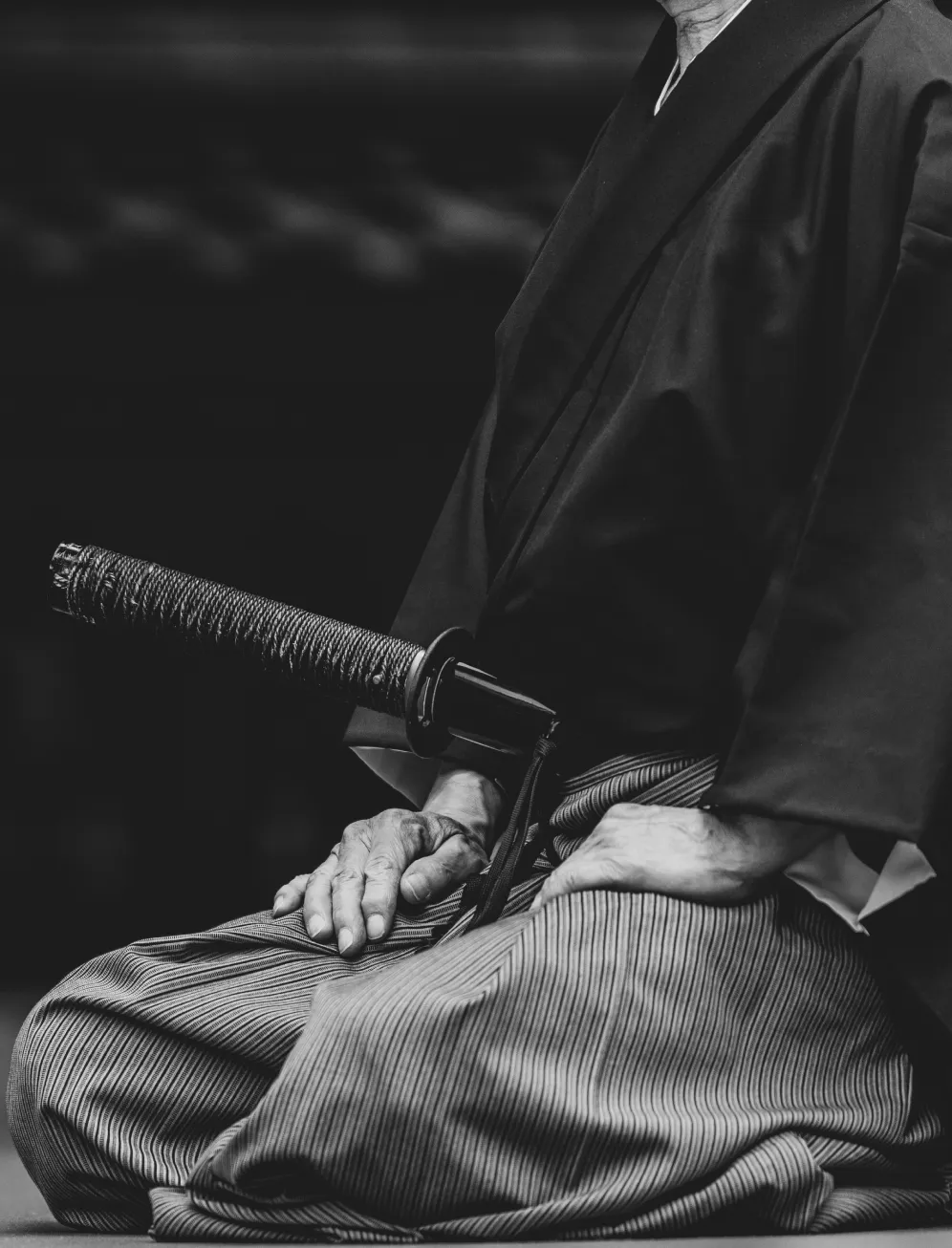

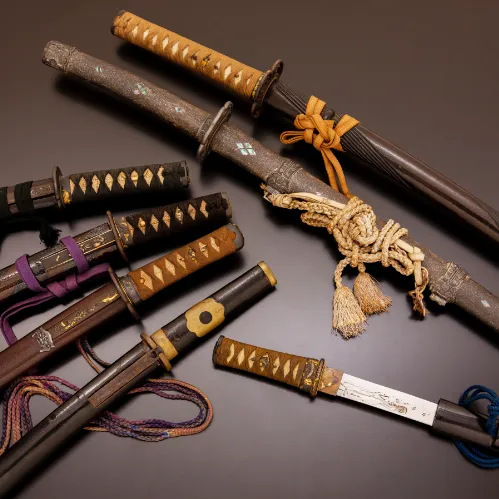
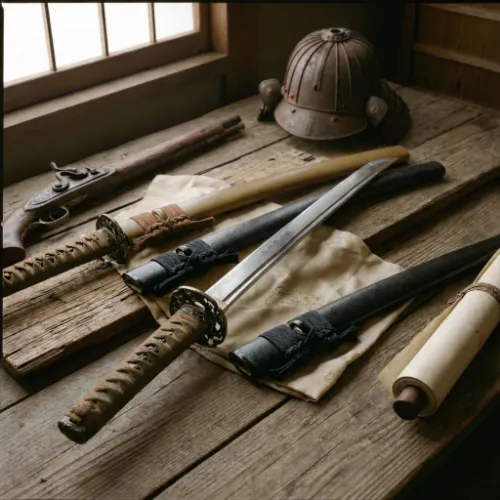
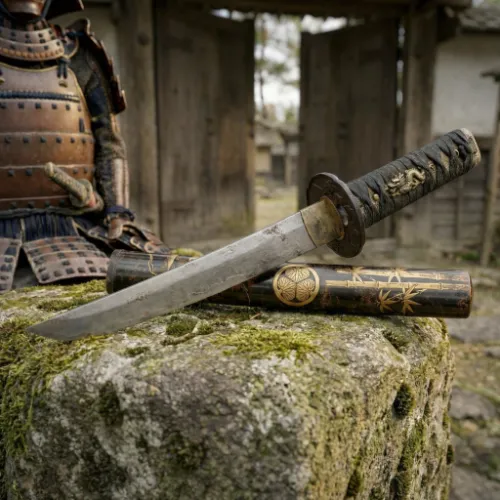

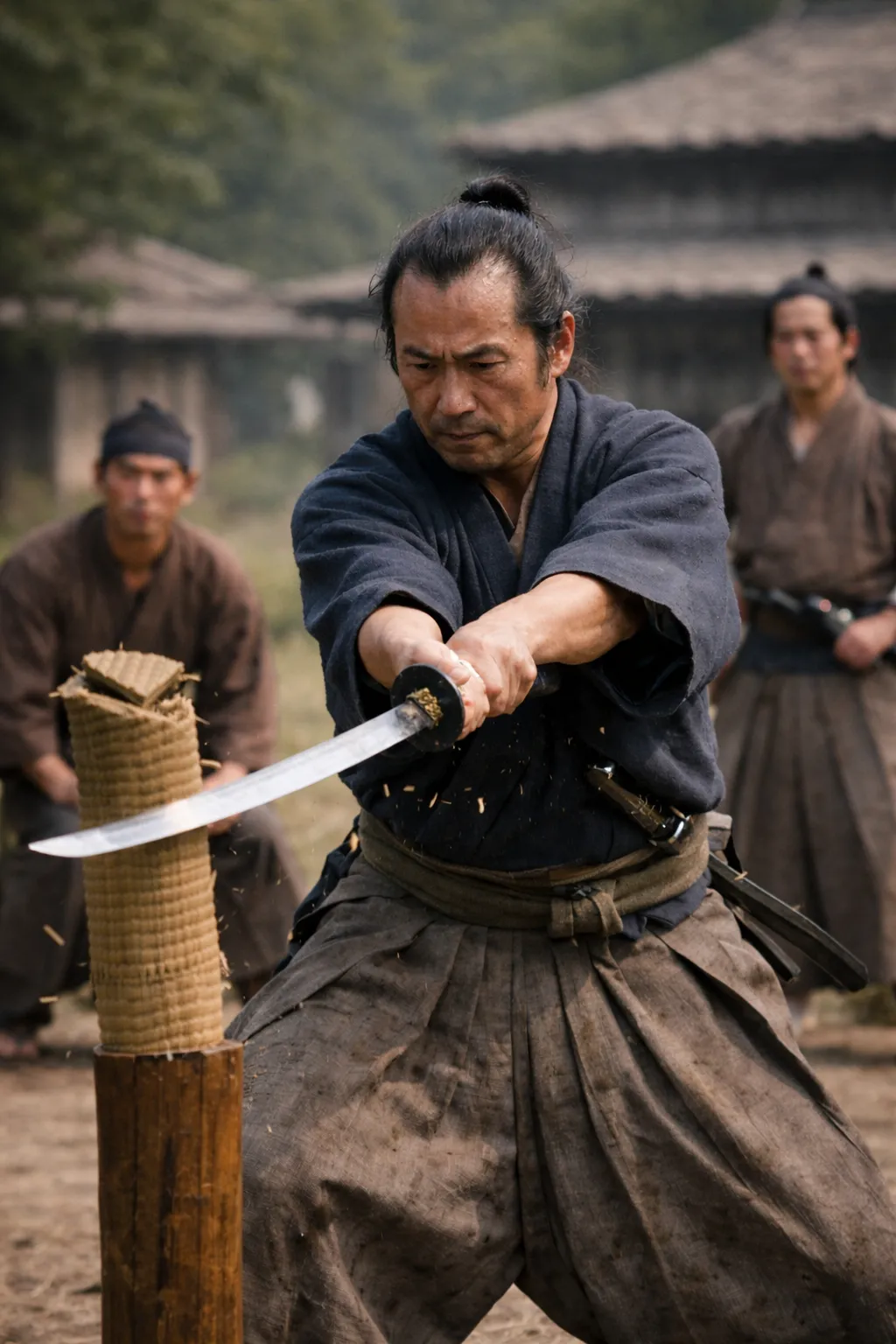
“The Katana is the soul of the Samurai.”
You have likely heard this famous phrase in movies or books, but rarely is its true meaning fully explained.
Is it a religious statement? Is it warrior pride? Or just a poetic metaphor?
If you search for “Did Samurai worship their swords?”, you might find conflicting answers. This article clarifies the difference between the Katana as a Weapon and the Katana as a Spiritual Symbol. We will explore the historical background of why the Katana became sacred and organize the essential “etiquette” that modern owners must know to show proper respect.
Disclaimer: This article provides general cultural and historical information. Laws regarding the ownership, import, and export of a Katana vary by country and region. Always check the latest legal regulations in your area before purchasing or owning one.
- Not just a metaphor: The “Soul” concept is rooted in Shinto beliefs (objects housing spirits) and social status (the Katana as a badge of honor).
- Spiritual Pillar: The Katana visualized a warrior’s honor and responsibility. To mistreat the blade was to stain one’s own honor.
- Sacred Craftsmanship: Swordsmiths wear white priestly robes and perform purification rituals. The creation process itself is a Shinto ceremony.
- Modern Meaning: Owning a Katana today means becoming a “custodian” of centuries of Bushido spirit, requiring strict etiquette and care.
- 1. What “Soul” Really Means: Shinto, Status, and Discipline
- 2. Why is the Katana Sacred? (3 Common Misconceptions)
- 3. History Proves the Connection: The Katana and the Japanese People
- 4. Warning: Taboos You Must Never Commit
- 5. How to Own Correctly: Etiquette for Collectors
- 6. Safety First: Maintenance Basics for Today
- 7. FAQ
- 8. Summary
1. What “Soul” Really Means: Shinto, Status, and Discipline
The phrase “The Soul of the Samurai” is often lumped into one vague idea overseas, but when we unravel the cultural background, it consists of three distinct elements.
| Element | Meaning | Key Point |
|---|---|---|
| Shinto | Purity and Exorcism | In Japan, mirrors and swords are believed to house spirits. The Katana is a sacred item that wards off evil. |
| Status | Privilege and Responsibility | Wearing a Katana was proof of public authority and the responsibility to discipline oneself. |
| Discipline | A Mirror of the Self | “Rust on the blade is rust on the heart.” Caring for the Katana is synonymous with polishing one’s own mind. |
When someone says, “I like Katanas,” the way you should approach them depends entirely on whether they are attracted to the “cutting ability (Weapon)” or the “spirituality (Art and Background).”
2. Why is the Katana Sacred? (3 Common Misconceptions)
Misconception #1: “The more people it killed, the more soul it has.”
Influenced by movies, many believe that a “blood-soaked Katana” holds more spiritual power. In traditional Japanese values, the opposite is true. For many celebrated blades, “not having to draw” was considered the highest ideal. As the teachings of Tokugawa Ieyasu suggest, the Katana is for protecting oneself, and drawing it recklessly was considered shameful. Blood and fat cause rust, which is seen as “kegare” (impurity) that damages the blade’s artistic value.
Misconception #2: The Katana was the main battlefield weapon.
In actual warfare, the primary weapons were bows, spears, and guns. The Katana was a secondary weapon for self-defense, and because of that, it was “the existence that stayed with the Samurai until the very end.” A spear might be replaced if broken, but the Katana at one’s waist remained close at all times. This physical closeness created a sense of spiritual identity (Katana = Self).
Misconception #3: Every sword was considered sacred.
In reality, there was a huge difference between mass-produced swords called “Kazu-uchi” and custom-made blades where the swordsmith poured his soul into the work. The ones treated as “Souls” were primarily the latter—heirloom-level blades. Even in the modern market, there is a massive gap in spiritual value (not just price) between mass-produced replicas and a “Shinken” (real sword) made by traditional methods.
3. History Proves the Connection: The Katana and the Japanese People
Here, we organize historical facts—not just legends—about how the Katana was treated.
3-1. The Swordsmith’s Ritual: Making is a Divine Act
The forge where a Katana is made is considered a sacred space. Before working, the swordsmith purifies his body with cold water (Misogi) and works within a barrier marked by a sacred rope (Shimenawa). This is not merely metalworking; it is a ritual to “invite the power of the gods into the steel.” Because it goes through this process, the finished Katana is spiritual enough to be enshrined on an altar.
3-2. Edo Period Law: The Katana as a Passport and Badge
In the peaceful Edo period (17th century onwards), the Katana shifted from a tool of war to a symbol of authority. Laws restricted the carrying of swords to the Samurai class, making the Katana a form of ID card stating, “I am a Samurai (I hold a position of responsibility).” Forgetting one’s Katana when going out was as shameful as walking outside naked, and it was a grave error that could cost a Samurai his status.
4. Warning: Taboos You Must Never Commit
If you wish to respect the Katana, the most important thing is “Handling.” The following actions are considered blasphemy against the Katana (and thus the Samurai soul).
-
Touching the blade with bare hands:
Human sweat and oil are poison to a Katana. They cause rust within days, ruining hundreds of years of history. -
Stepping over the Katana:
Stepping over a Katana placed on the floor is equivalent to trampling on the owner’s soul. Historically, this was an insult severe enough to be cut down for. -
Pointing the tip at someone:
Whether passing the blade or admiring it, pointing the “Kissaki” (tip) at another person is a sign of hostility.
These are strictly organized as absolute taboos even in modern dojos and among collectors.
If you see “Active Rust” (red rust) on your Katana, it is an emergency. Do not try to scrub it off yourself. Consult a professional polisher (Togishi) immediately. Incorrect amateur polishing can permanently destroy the artistic value of the Katana.
5. How to Own Correctly: Etiquette for Collectors
Owning a Katana means becoming a “Custodian” of cultural heritage. Knowing these points will earn you trust when speaking with the sword community or experts.
-
Do you know the viewing manners?
Do not speak directly over the blade (use a mask or paper to prevent saliva from landing on it). Bow before picking it up to show respect. -
Do you have a maintenance kit?
Three items—Uchiko (powder ball), Choji Oil, and Nuguigami (wiping paper)—are essential. Buying a Katana without these is like buying a car without brakes. -
Do you respect the “Nakago” (Tang)?
You must never polish the rusty part inside the handle (the Nakago). That rust is the “witness of history” that proves the Katana’s age and authenticity.
6. Safety First: Maintenance Basics for Today
Here are simple safety principles to protect the Katana.
- Clean it every time you touch it. (Fingerprints are the source of rust.)
- Do not store in high humidity or direct sunlight.
- Wipe off old oil regularly and apply a thin layer of new oil. (Thick oil can damage the wooden scabbard.)
- Do not neglect it for years. (Rust can progress inside the scabbard. Check it at least once every three months.)
7. FAQ
Q1. Why did Samurai commit Seppuku? Is it related to the Katana?
A. Seppuku was a ritual to “open one’s abdomen (where the soul was believed to reside) to prove there was no falsehood in one’s heart.”
A Tanto or Wakizashi was used for this final ceremony. The blade was not just for defeating others, but a tool to complete one’s own honor. This is one ultimate reason why “Katana = Honor.”
Q2. Is the feeling of “being chosen by the Katana” real?
A. Many collectors speak of an “encounter.”
While it cannot be scientifically proven, there are moments when the beauty of the Hamon (temper line) or the balance in hand perfectly matches your senses. In Japan, we call this “En (Fate).” Just as you choose the Katana, the Katana judges the dignity of its owner.
Q3. What is the meaning of owning a Katana in modern times?
A. A modern Katana acts as an anchor to regain “silence” and “focus” in a busy daily life.
The time spent gazing at a beautifully polished blade brings an effect close to meditation. It is the exact same experience Samurai once had when calming their minds through sword care.
8. Summary
- The phrase “The Katana is the soul of the Samurai” is a substantive concept born from Shinto beliefs and the social responsibility of Bushido.
- Historically, the Katana was treated more as a symbol of authority and an offering to the gods than merely a weapon of war.
- Owning a Katana today is not just about collecting; it means becoming a “guardian” who manages centuries of history and spirituality.
- Only by practicing correct etiquette (bowing, maintenance, avoiding taboos) can one truly touch that “Soul.”
When you hold a Katana, look beyond the steel. Feel the “way of life” and “aesthetics” of the Samurai who once carried it. That is the true reason why the Katana is loved around the world.
If you found this article helpful, please subscribe to our newsletter. Next time, we will dig deep into “How to Identify an Authentic Katana vs. a Replica.”

No comments yet.